ぼうさいこくたい2018 公開シンポジウム
『災害からあなたを守る科学技術との対話』
日時:平成30年10月13日(土)12:30~14:00
場所:東京ビッグサイト(東京国際展示場)701・702会議室
主 催:日本学術会議(科学技術を生かした防災・減災政策の
国際的展開に関する検討委員会および
土木工学・建築学委員会IRDR分科会)
プログラム:
<http://wci.t.u-tokyo.ac.jp/events/bousaikokutai2018_web.pdf>
お申込み(入場無料・要参加登録):
<https://goo.gl/S3vxLP>
奮ってご参加ください!
Friday, September 21, 2018

Monday, September 17, 2018
八ッ場ダム見学会 2日目(9/4)
(文責:B4西原)
八ッ場ダム見学会の2日目は,午前に土木研究所の山口先生からダムの基礎的なことから最新の技術紹介までダムの知識を幅広く教わった後に,世界でも珍しい中和事業を行っている品木ダムを訪問した.
・品木ダム
草津は温泉街で全国的に有名であり,その中心部に位置する湯畑からは昼夜問わず”温泉の匂い”(硫化水素など)がする.しかし,草津周辺一帯のそのような強酸水は農業用水や生活用水には使うことができず,またコンクリートもすぐに腐食してしまうためダムだけでなく橋も架けられない状態が続いていた.そこで行われたのが,世界的に見ても珍しい「中和事業」である.硫黄分を多く含む水に石灰石(炭酸カルシウム)などを投入することで弱酸遊離がおこり,硫酸塩が沈殿してpHが7に近づく.一日の投入量は約50トンで,投入する石灰石は近くの山から運んできているとのことだった.
その石灰石を貯蔵するタンクの大きさを見て,自然を制御することの大変さを感じることができた.
・八ッ場ダム見学会全体を通しての感想
私は今回で八ッ場ダムを訪問するのは4回目であったが,堤体の上流側に入ったり採石場を見に行ったりすることは初めてであった.そして改めてダムという人間がつくる最も大きな建造物の迫力に圧倒されるとともに,ダム現場で実際に施工や指揮に携わる人々の苦労であったりやりがいであったり,少しお酒が入ったときには利害関係者への恨み話であったり,そういった生の話を聞くことができてとても楽しく2日間を過ごすことができた.
今回のダム工学会若手の会は若い土木技術者にダムの魅力を知ってほしいという目的で開かれているとのことで,貴重な機会を作ってくださったことに感謝するとともに,私も土木を学ぶ一人として微力ながらダムの魅力を多くの人に伝えるべくこれから努力したいと思う.
八ッ場ダム見学会の2日目は,午前に土木研究所の山口先生からダムの基礎的なことから最新の技術紹介までダムの知識を幅広く教わった後に,世界でも珍しい中和事業を行っている品木ダムを訪問した.
・品木ダム
草津は温泉街で全国的に有名であり,その中心部に位置する湯畑からは昼夜問わず”温泉の匂い”(硫化水素など)がする.しかし,草津周辺一帯のそのような強酸水は農業用水や生活用水には使うことができず,またコンクリートもすぐに腐食してしまうためダムだけでなく橋も架けられない状態が続いていた.そこで行われたのが,世界的に見ても珍しい「中和事業」である.硫黄分を多く含む水に石灰石(炭酸カルシウム)などを投入することで弱酸遊離がおこり,硫酸塩が沈殿してpHが7に近づく.一日の投入量は約50トンで,投入する石灰石は近くの山から運んできているとのことだった.
その石灰石を貯蔵するタンクの大きさを見て,自然を制御することの大変さを感じることができた.
 |
| 左が処理前,右が処理後.pH1程度だった水がpH6程度に中和されていることが分かる. |
 |
| 石灰を含んだ水を川に投入している様子.手前側から奥の方に流れているのだが,石灰を投入した後は中和生成物によって白濁している. |
・八ッ場ダム見学会全体を通しての感想
私は今回で八ッ場ダムを訪問するのは4回目であったが,堤体の上流側に入ったり採石場を見に行ったりすることは初めてであった.そして改めてダムという人間がつくる最も大きな建造物の迫力に圧倒されるとともに,ダム現場で実際に施工や指揮に携わる人々の苦労であったりやりがいであったり,少しお酒が入ったときには利害関係者への恨み話であったり,そういった生の話を聞くことができてとても楽しく2日間を過ごすことができた.
今回のダム工学会若手の会は若い土木技術者にダムの魅力を知ってほしいという目的で開かれているとのことで,貴重な機会を作ってくださったことに感謝するとともに,私も土木を学ぶ一人として微力ながらダムの魅力を多くの人に伝えるべくこれから努力したいと思う.
 |
| 集合写真(土木研HPより) |
Friday, September 7, 2018
Field trip to Yanba Dam – Day 1
By Liu Chang
Hello everyone, this is
Liu Chang writing about our field trip to Yanba Dam from 3rd
September to 4th September. Just for your information, Yanba Dam is
a dam project that is under construction in Naganohara, Agatsuma District,
Gunma Prefecture, Japan. The project is currently under construction, with
completion slated for 2019. Planning for the dam began in 1947, and it was
planned to be completed by 2015. The dam is famous for its construction causing
local opposition and ballooning budget.
 |
| Trip Map from Google Map: https://maps.google.co.jp/ |
As
we can see from the trip map above, we get together at 8:30 at Ikebukuro
station. After taking some more members at Takazaki station, we finally arrived
at Hometown Hotel (八ッ場ダムふるさと館). There we have an
interesting lunch which is known as Dam Curry (ダムカレー).
The name was from its special shape imitating Yanba Dam.
 |
| Dam Curry |
After
having lunch, we find some interesting posters in the hotel which describes the
history of construction of Yanba Dam. As it shows below, it has taken a lot of
time discussing and communicating with residents, which makes it one of the
most time-consuming dams.
 |
| Posters about construction history |
When
we drive to the dam site, we see Yanba Dam from the windows.

Then
we get to the Construction Office, where a brief introduction was given. Yanba
Dam is built to be a gravity dam. A gravity dam is a dam constructed from
concrete or stone masonry and designed to hold back water by primarily using
the weight of the material alone to resist the horizontal pressure of water
pushing against it. With a height of 116 m, Yanba Dam is the 50th
highest dam in Japan. And it will be designed to apply 11,700 kw electricity
with controlling a discharge range from 3,000 to 200 m3/s. A lot of
techniques are being used to complete the construction, one of the most
impressive is the Cruise RCD (巡航RCD工法). This technique built the stone
in the middle first and then cover it with concrete.
 |
| Cruise RCD from Iwakigawa Dam Integrated Management Office: http://www.thr.mlit.go.jp/tugaru/specifi/rcd3.html |
Later,
we get another chance to go near to the construction site and see the details.
From the detailed trip we see that to facilitate the construction, a long rail was
built to transport the aggregate. And the rock was taken from a small mountain
nearby. After one or multiple times of comminution, the rock was departure due to
different size. Because of classification reason, we are not supposed to post
any photos.
Then we finally get to
the Kusatsu Hotel. Before dinner we have a small group work on three themes
about the usage and future of Yanba Dam. Our group chose to discuss about how
to arrange some activities of Yanba Dam. Finally, Haga-san gave a fascinating
presentation about 1) some boat sightseeing on dam river; 2) project mapping on
dam; 3) climbing activity on dam.
 |
| Discussion on group work |
Finally, we had a
relaxing party with members and staffs. The food is so delicious. Although we must
stop for a while for digest and some brief introduction about our lab.
 |
| Introduction of REEL |
One more interesting
thing is at the ending of party, Kawasaki-sensei taught us a new style of
Banzai. It is some gestures imitating a strong dam trying to lift some heavy
water. And by the way, the hot spring is really hot for a foreigner like me!


Tuesday, September 4, 2018
One Year at The University of Tokyo
Dear Kawasaki Group,
Hi, it is Yi-Chia. It has been a year since I arrived at The University of Tokyo. Thank you all for helping me along the way. I really enjoyed the time in our group. In this article, I would like to share my impressions of learning in Japan with you, including two parts: on-campus and off-campus.
On-campus
 |
| M2 B4送別会, March 2018 |
First of all, there are three main advantages making our lab distinguished.
1. Diversity
More than half of our members are international students from various countries: Pakistan, Philippines, China, India, Sri Lanka, and Taiwan. It is a valuable experience for our group members to learn from people of different backgrounds and cultures. Such diversity may inspire us through communication to create more values.
2. International research
Our group has the strong development of research in many countries; for instance, Myanmar, India, China, and Japan. One of the focused countries is Myanmar. Visiting Myanmar inspired me to find my commitment to make the developing countries more resilient to flood and climate change. Such international research experience will absolutely equip us with great vision and uniqueness.
3. Practical solutions
Most of our researches aim to provide the practical solutions to real-world problems. The solutions usually require the cooperation with international development agencies, local government, and relevant stakeholders. I learned significantly by discussing with all communities, including JICA (Japan International Cooperation Agency), YTU professors and students, Myanmar government engineers, and Pasco Corporation.
Besides the research advantages, I am grateful for the farewell parties and the interesting gifts from our lab members and friends. Here are some photos of them.
 |
| 学期末パーティと綺麗な扇子 |
 |
| 川崎グループ送別会 |
 |
| 芳賀君の七億円扇子と浅草酒杯 |
 |
| 武藤さんの今治タオル |
 |
| 面白いプレゼント |
Maybe some of you have not read my master thesis, I post the part of acknowledgment that I wrote in my thesis here.
“
I would like to express my sincere appreciation to Dr. Akiyuki Kawasaki, my supervisor at The University of Tokyo. Dr. Kawasaki contributes professional opinions and significant support to this thesis. The visit to Bago River Basin helps me to better understand the real flood threats to the local residents. Dr. Koji Ikeuchi, Dr. Takeyoshi Chibana, and Dr. Satoshi Watanabe lead the fruitful discussion in River Environmental Engineering Laboratory. Dr. Ralph Acierto provided the dynamical downscaling and bias correction data, which is critical in this research. Mr. Tomoaki Itaya supported the development of CNN downscaling model. This research could not be accomplished without these kind helps.
To River Environmental Engineering Laboratory Kawasaki Group members: Wei san, I always have the pleasure and constructive discussion with you. Good luck to your research in Harvard and anywhere! Seemanta san, thanks for your RRI model. Gouri san, good luck to your Ph.D. thesis and your future career! Moiz san, it is always fun to have lunch and heard your interesting stories. Good luck with your brilliant Ph.D. research! Yonehara san, although we stayed in the same lab only several months, I learned a lot from you, both in Bago research and in Japanese daily lives. Hope you enjoy the career in JR! Yuya san, thank you for lending me the guitar. Good luck to your work in CTI Engineering. Haga san, wish you the best to your master thesis! Liu san, good luck to your ancient China flood research! Yamagami san, Shimomura san, Okuda kun, Nishihara san, wish you all the best in your future work. I especially thank Muto san for being my tutor and supporting my primary stage of stay in Tokyo.
”
Off-campus
I also got chances to visit many magnificent places and made life-long friends. Here is just a glimpse of several views.
 |
| 仙娥滝(山梨県昇仙峡) |
 |
| 白川郷(岐阜県) |
 |
| 金沢市(石川県) |
 |
| 目黒川花見(東京都) |
 |
| キツネ村(仙台市蔵王町) |
 |
| 江戸川区花火大会(東京都浅草) |
 |
| 赤レンガ倉庫(神奈川県横浜市) |
 |
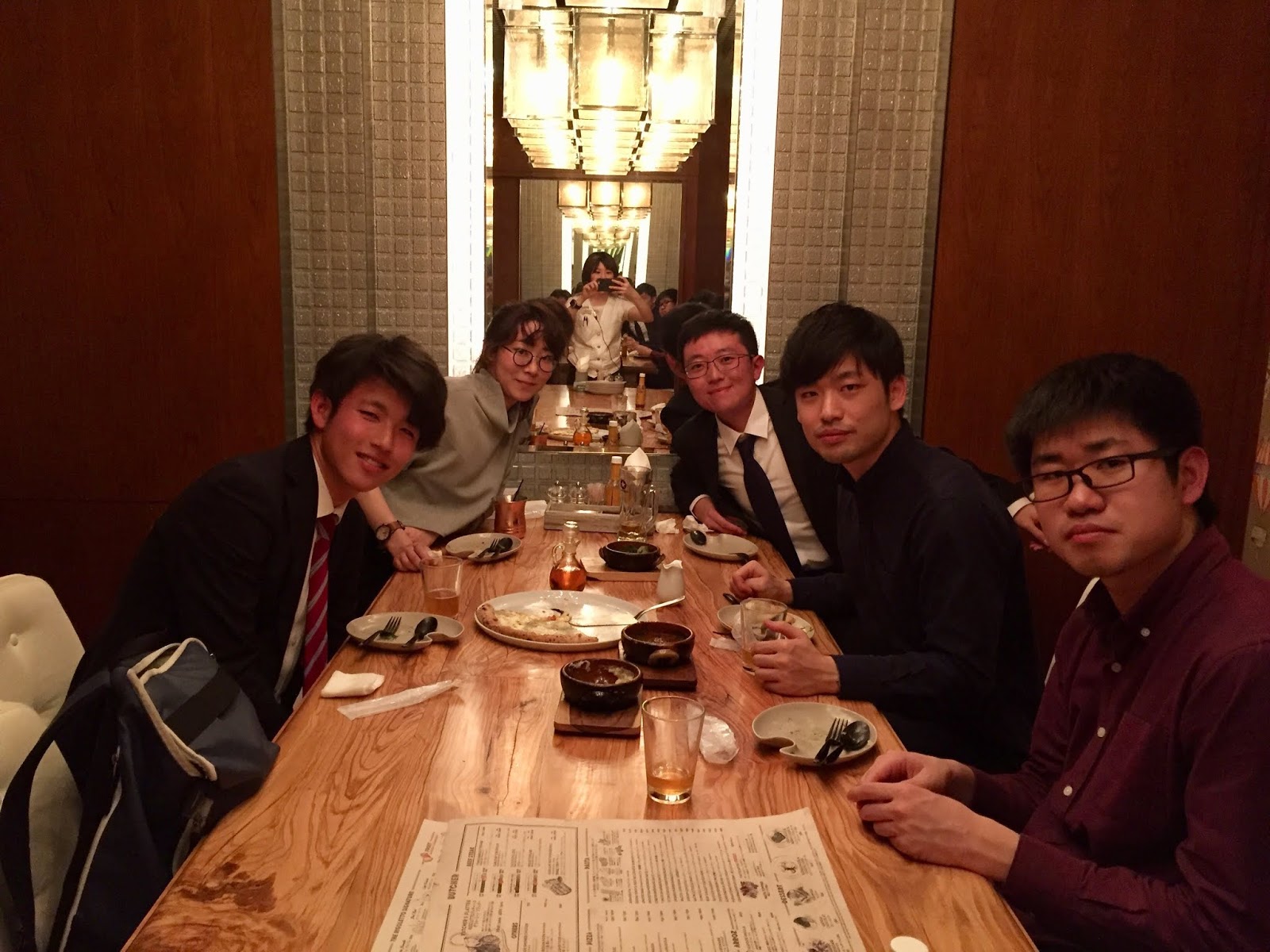
| 足利フラワーパーク(栃木県)with my best friends |
 |
| 株式会社パスコのインターン |
 |
| Hallstatt, Austria |
 |
| Bago, Myanmar |
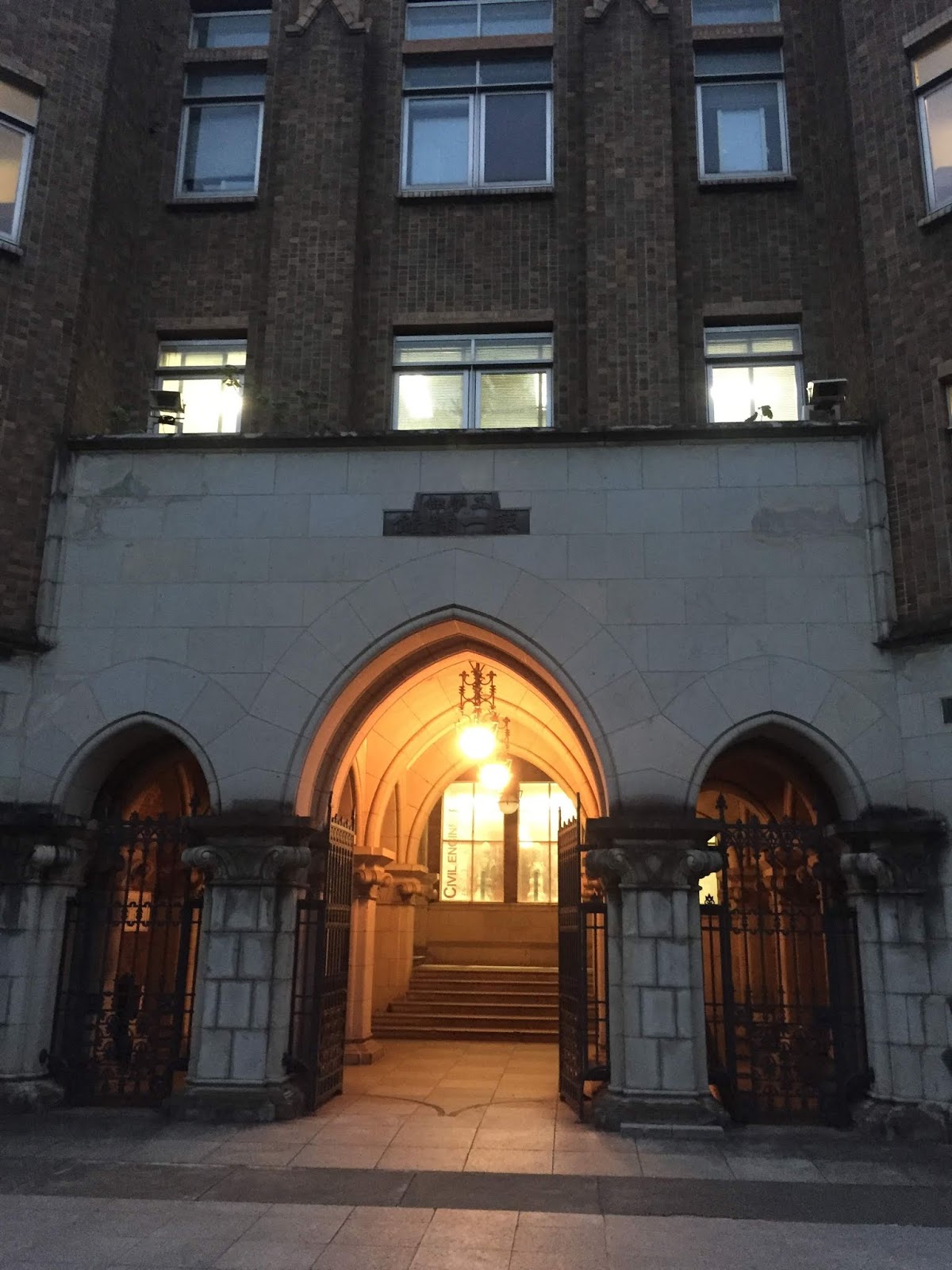 |
| 東京大学本郷キャンパス工学部1号館 (my second home in Tokyo) |
One year is short but long enough to make some changes. I completed my master thesis, gained the internship experience, traveled to many places, learned Japanese, and made great friends. It is definitely a fruitful, fun and solid journey in REEL and Kawasaki Group.
皆様 お世話になりました。
いい思い出日本の学生生活を過ごすことができました。
感謝の気持ちがいっぱいです。ありがとうございました。まだ東京で会いましょう。
台湾に来られる機会あれば、ぜひ 連絡ください。
Yi-Chia
Sunday, September 2, 2018
ADBインターン②
M1の山上@ADBです!
今回は合計20名くらいいるインターン生のことを紹介したいと思います。
ADBインターンは年2回募集がかかるのですが、私と同期のインターンは中国・シンガポール・ベトナム・インドネシア・地元フィリピン・カナダ・ウズベキスタン・韓国・ネパール・タイなどの国から集まっています。
印象としては経済がバックグラウンドだったり、PhDの方が多くいたりしてとても新鮮な環境です。
インターン同士では一緒にごはんを食べたり観光をしたりとても仲良く交流しています!
特に、フィリピンの子がいると地元のレストランなどでの時にとても心強いです。
皆とは仕事内容だけでなく自分の国のこと、将来のキャリアのこと、ニュース、そして他愛もないことまで様々なことをしゃべります。
私は7月下旬から来ていますが、ほかのインターンは6月から8・9月までなどタイミングは様々です。すでにインターンを終えた人もいて、少しずつ送り出すのはとても寂しいものです。
インターンは(内容にもよりますが)最終週に成果を発表する機会があります。
これまでに5〜6人ほどのプレゼンを見てきましたが、経済分析から介護制度の将来、下水処理プロジェクト、そしてe-Learningなどまで実に様々なテーマに取り組んでいます。
様々な国籍の同世代と出会えてとても充実しています、私も良い成果を出せるよう頑張ります、、!
今回は合計20名くらいいるインターン生のことを紹介したいと思います。
ADBインターンは年2回募集がかかるのですが、私と同期のインターンは中国・シンガポール・ベトナム・インドネシア・地元フィリピン・カナダ・ウズベキスタン・韓国・ネパール・タイなどの国から集まっています。
印象としては経済がバックグラウンドだったり、PhDの方が多くいたりしてとても新鮮な環境です。
 |
| ADB facebookのスクリーンショットです https://www.adb.org/site/careers/internship-program |
 |
| 8/2にIntern Learning Sessionがあり、 そのあと皆でご飯に行きました |
インターン同士では一緒にごはんを食べたり観光をしたりとても仲良く交流しています!
特に、フィリピンの子がいると地元のレストランなどでの時にとても心強いです。
皆とは仕事内容だけでなく自分の国のこと、将来のキャリアのこと、ニュース、そして他愛もないことまで様々なことをしゃべります。
 |
| シンガポールの同い年の子と辻利へ |
 |
| 皆で集まってランチ |
私は7月下旬から来ていますが、ほかのインターンは6月から8・9月までなどタイミングは様々です。すでにインターンを終えた人もいて、少しずつ送り出すのはとても寂しいものです。
 |
| お疲れさまパーティ、 中国の子の本場の火鍋はとても辛くて美味しかったです |
インターンは(内容にもよりますが)最終週に成果を発表する機会があります。
これまでに5〜6人ほどのプレゼンを見てきましたが、経済分析から介護制度の将来、下水処理プロジェクト、そしてe-Learningなどまで実に様々なテーマに取り組んでいます。
様々な国籍の同世代と出会えてとても充実しています、私も良い成果を出せるよう頑張ります、、!
Saturday, September 1, 2018
ミャンマー現地調査
初めまして、B4の奥田です。
僕も下村さんと同じく、8月14日~8月18日にミャンマーへ現地調査へ行ってきました!その時の様子を紹介したいと思います。
14日
この日はヤンゴンに到着後、川崎先生と東北大学の方々と合流して晩御飯を食べに行きました。モツみたいな感じでした。おなかを壊さないか心配でしたが大丈夫でした。

15日
この日からヤンゴン工科大学の学生の方たちと合流し、バゴーへ向かいました。午前中はバゴーの灌漑局でミーティングを行い、午後からはバゴー市街地の調査を行いました。

16~18日
バゴーの市街地と郊外の農村の調査を行いました。ミャンマーの8月は雨期のため、毎日激しい雨が降りました。この影響で特に川の周辺では浸水している場所がたくさんありました。
今回の調査では、洪水常襲地に暮らす人々の生活の様子を見ることができました。例えば、家の周辺にたまった水を利用して魚を取っている人がいました。こんなところで魚がとれるのか疑問に思っていましたが、意外にもたくさんの小魚がとれていました。日本では見ることがないような光景だったので面白かったです。
また、今回の調査ではドローンを使って空中からの写真を撮影しました。今回集めたデータを生かしてこれからの研究を進めていこうと思います。
最後の夜には今回の調査を手伝っていただいたヤンゴン工科大学の方々と一緒に夕食を食べて、集合写真を撮りました!
今回が初めてのミャンマー訪問だったので、ミャンマーの人々の生活の様子を見たり、洪水に対する考え方を聞いたりすることができて非常に勉強になりました。
調査中お世話になった川崎先生、東北大学の小森先生、ヤンゴン工科大学の方々、ありがとうございました!
僕も下村さんと同じく、8月14日~8月18日にミャンマーへ現地調査へ行ってきました!その時の様子を紹介したいと思います。
14日
この日はヤンゴンに到着後、川崎先生と東北大学の方々と合流して晩御飯を食べに行きました。モツみたいな感じでした。おなかを壊さないか心配でしたが大丈夫でした。

15日
この日からヤンゴン工科大学の学生の方たちと合流し、バゴーへ向かいました。午前中はバゴーの灌漑局でミーティングを行い、午後からはバゴー市街地の調査を行いました。
 |
| 灌漑局の方にお土産を渡す川崎先生 |

16~18日
バゴーの市街地と郊外の農村の調査を行いました。ミャンマーの8月は雨期のため、毎日激しい雨が降りました。この影響で特に川の周辺では浸水している場所がたくさんありました。
 |
| 浸水している道 |
今回の調査では、洪水常襲地に暮らす人々の生活の様子を見ることができました。例えば、家の周辺にたまった水を利用して魚を取っている人がいました。こんなところで魚がとれるのか疑問に思っていましたが、意外にもたくさんの小魚がとれていました。日本では見ることがないような光景だったので面白かったです。
 |
| このネットで魚を捕まえます |
 |
| 魚を捕る道具 |
また、今回の調査ではドローンを使って空中からの写真を撮影しました。今回集めたデータを生かしてこれからの研究を進めていこうと思います。
 |
| ドローンで撮影した写真 |
最後の夜には今回の調査を手伝っていただいたヤンゴン工科大学の方々と一緒に夕食を食べて、集合写真を撮りました!
 |
| 集合写真 |
今回が初めてのミャンマー訪問だったので、ミャンマーの人々の生活の様子を見たり、洪水に対する考え方を聞いたりすることができて非常に勉強になりました。
調査中お世話になった川崎先生、東北大学の小森先生、ヤンゴン工科大学の方々、ありがとうございました!
Thursday, August 23, 2018
初ミャンマー!
初めまして、M1から川崎グループに入りました下村菜摘です。
早速ですが、先週の8/14から8/18にかけて川崎先生&川崎グループB4奥田君&某M1(生研所属)とミャンマーの洪水調査に行ってきました!初ミャンマーにどきどきの毎日でした。その一部をお届けします。
14日
ミャンマーのヤンゴン到着、屋台の焼き鳥?を食べたのがハイライト。今回の調査は東北大学のお二人も一緒でしたが、ここで初エンカウンター。

15日
ヤンゴン工科大学の学生の方々と合流し、バゴーに移動。早速ミャンマー当局
とミーティングです。豪華なランチをごちそうになった後、いよいよバゴーでの洪水調査がスタートしました。バゴー市街地は東京にあってもびっくりするような立派な豪邸がある一方、雨風をしのぐのがやっとのような家もあり、興味深い街並みでした。

16~18日
ひたすらバゴー&周辺の農村で洪水調査をしました。しかし、季節は8月雨期真っ盛り。毎日雨が降って少し洪水気味になっていました。
ひざ丈ほどの浸水に動揺する私たちをよそに、淡々と水の中を歩く現地の人々。質問調査をする中でも、みんなこれくらいの浸水は大したことがないと答えていて、ミャンマーの人にとっては、洪水のある生活が当たり前なのだと実感しました。
雨がやんだ隙をついて、奥田君はドローンを飛ばします(奥田君はドローンの画像を用いた研究をするそうです)。
ドローンを飛ばしていると、いつもたくさんの人が集まってきました。ドローンを見てはしゃぐ子供たちのかわいさと言ったら。ミャンマーは日本より遥かに子供の数が多いですね。高齢化の進む日本と対照的に、これからどんどん発展していくんでしょうね…
私の研究はおそらくミャンマーが対象になるので、実際にミャンマーの人びとの暮らしを見ることができとてもいい経験になりました。調査中ずっとお世話になった川崎先生、東北大学の小森先生、ヤンゴン工科大学の学生の方々、どうもありがとうございました!!
早速ですが、先週の8/14から8/18にかけて川崎先生&川崎グループB4奥田君&某M1(生研所属)とミャンマーの洪水調査に行ってきました!初ミャンマーにどきどきの毎日でした。その一部をお届けします。
14日
ミャンマーのヤンゴン到着、屋台の焼き鳥?を食べたのがハイライト。今回の調査は東北大学のお二人も一緒でしたが、ここで初エンカウンター。

15日
ヤンゴン工科大学の学生の方々と合流し、バゴーに移動。早速ミャンマー当局
とミーティングです。豪華なランチをごちそうになった後、いよいよバゴーでの洪水調査がスタートしました。バゴー市街地は東京にあってもびっくりするような立派な豪邸がある一方、雨風をしのぐのがやっとのような家もあり、興味深い街並みでした。
 |
| ミーティング中、ミャンマーの正装を着こなす川崎先生 |

16~18日
ひたすらバゴー&周辺の農村で洪水調査をしました。しかし、季節は8月雨期真っ盛り。毎日雨が降って少し洪水気味になっていました。
 |
| 水の中でも歩くのが速い川崎先生 |
ひざ丈ほどの浸水に動揺する私たちをよそに、淡々と水の中を歩く現地の人々。質問調査をする中でも、みんなこれくらいの浸水は大したことがないと答えていて、ミャンマーの人にとっては、洪水のある生活が当たり前なのだと実感しました。
雨がやんだ隙をついて、奥田君はドローンを飛ばします(奥田君はドローンの画像を用いた研究をするそうです)。
 |
| さらっと輪の中に入る地元のおじさん(左端) |
 |
| ドローンを見に集まる子供たちとその家族 |
ドローンを飛ばしていると、いつもたくさんの人が集まってきました。ドローンを見てはしゃぐ子供たちのかわいさと言ったら。ミャンマーは日本より遥かに子供の数が多いですね。高齢化の進む日本と対照的に、これからどんどん発展していくんでしょうね…
私の研究はおそらくミャンマーが対象になるので、実際にミャンマーの人びとの暮らしを見ることができとてもいい経験になりました。調査中ずっとお世話になった川崎先生、東北大学の小森先生、ヤンゴン工科大学の学生の方々、どうもありがとうございました!!
Subscribe to:
Posts (Atom)