Tuesday, March 17, 2020

A Visit to Myanmar (February 5th – March 5th, 2020)


Name – Nyi Linn Maung
Grade – M1 student  in Kawasaki Research Group, The University of Tokyo

During my stay in Myanmar for both of my research and meetings with different departments of Myanmar government, it was a great time for me as of having a chance to meet with my family and get to know current relationships and future collaborations between the two nations. As I am originally from Myanmar, I wanted to go back to my family during holidays of my coursework for master’s degree. Fortunately, Kawasaki Sensei told me that it would be great if you also conducted preliminary survey for your research during your stay in Myanmar and join them for meetings. For the first of two weeks of my stay in Myanmar, I had a great time with my family and I went to libraries and departments to collect data which will be necessary for my research. After being apart with my family for five months after I had left them for Tokyo, I spent a great time with them: going shopping, short trips, having meals together. Also, I conducted preliminary survey to collect data such as censuses, maps, reports and articles from libraries and departments. According to our schedule, I had two weeks before Kawasaki Sensei came to Myanmar; this opportunity had been a great chance for me and valuable for me. Moreover, I also had to know researchers and teachers from geography, and history departments of Yangon University for further collaborations and help. In this sense, my trip to Myanmar has been in a great help for me and for my research.

Meetings and Workshop
After Kawasaki and his group joined me, our group first had dinner together to discuss the travelling schedule to Nay Pyi Taw, Bago the following days. On 26th February, we left for Nay Pyi Taw in the early morning by flight to meet DG and DDG from IWUMD of Myanmar to show appreciation and gave presentation of the results of the SATREPS project. In this sense, Kawasaki sensei presented the results and benefits for utilizing the system for Bago River Flood Reduction Plan and gave speech to appreciate the strong relationship between the concerned organizations over five years-project. At this time, the results were shown in modernized manner for which it has been upgraded from the comments received from previous meeting in 2019. Three presentations were made in total. The first one is to show the results from the project between SATREPS, JICA, UTOKYO and YTU collaboration about the analysis of Near Real Time Inundation system in Bago River Basin. The main reason for our trip to departments is to show appreciation for the continuous support and collaboration of Myanmar governments. In addition to this, Kawasaki sensei and counterparts of Myanmar government discussed for further collaboration between Japan and Myanmar. All things went very well, and I had a great time to have met officials and seen great relationships between Japan and Myanmar. For having great relationships with such a developed country, Japan, it would be much benefitting for my country, Myanmar, which is only in a transition state for building the country. Also, to my knowledge, Myanmar is one of the countries on the top list of which will be severely affected from climate change in the near future, and we still lack sufficient countermeasures to tackle the coming monstrous disasters, which is why I thought it is requisite to attain assistance from every angle we can get. In this sense, I would like to thank Japan and Kawasaki sensei for having interest to implement disaster risk reduction projects in Myanmar.


Now, I would like to say a brief explanation for our presentations which had been recently undertaken under the supervision of Kawasaki sensei in Bago region of Myanmar. Kawasaki sensei and Dr. Badri from our River and Environmental Laboratory presented three presentations. The first presentation is the Near Real Time Inundation analysis system in Bago River system. In this presentation the main points that I would like to extract are how was Near Real Time System in Bago River developed – integrating satellite data, in-situ rainfall data, the system is mainly constructed using DIAS, near real time inundation system can be utilized to monitor the flooding conditions along the Bago River Basin from telemetry observations and flood inundation simulation, and we can improve the disaster mitigation plan from this system as a useful tool for implementing effective decisions on recovery plans. The second presentation is mainly about the features of Zaung Tu Dam to bring about the comprehensive disaster resilient system and the climate data and different instruments were installed for monitoring the dam conditions, and to evaluate the effectiveness of Zaung Tu Dam Operation for Flood Control from the two variables such as household and assets damage and agricultural damage. The Third Presentation is mainly for Modeling Livelihood Transition induced by Flood Risk Reduction by mentioning to promote the livelihood conditions in Myanmar by using improved safety and reduced risk perception and how the results were modeled from the inputs such as scenario, FRM and responsiveness and the model for hazard and impact was established and benefits from such approach analysis were depicted.


On the next day, we went to Bago for Workshop: Flood Risk Reduction Plan for Socioeconomic Development at Bago and we met the representatives from different departments for discussing the current problems and insights for reducing the flood risks in Bago and future collaboration between JICA, SATREPS, UTOKYO and YTU. In this sense, the representatives from both parties presented their current problems and how they can overcome these mentioned troubles with the help from academic field. For the UTOKYO Part, the same presentations were presented while Myanmar Government counterparts presented about the Zaung Tu project. In the afternoon, our group went for a courtesy call to Bago Regional Government for future collaboration between the organizations and presented the results.


Moreover, I had a valuable opportunity to go a site visit to informal settlements in Yangon on the following day. On this day, Kawasaki sensei unfortunately cannot join me as he had to attend the meeting at YTU. Nonetheless, this field trip had provided me with valuable hints on my research for the development of City which would have some effects on the poor people in Yangon. I went to three informal wards in Hlaing Thar Yar Township for investigating their current conditions and their current status on living in such informal areas. In this sense, as I do not have any approval documents for interviewing, I have only conducted only preliminary survey as when did they move to and why did they move as main concerns. On the next day, I conducted preliminary survey in the morning and we went to DWRR and Kawasaki sensei presented the same presentations as in the earlier days and discussed about the future collaboration between the parties. In the morning, after our professor has returned to Japan, we still have time so that we can go around Yangon in order to show some tourist visit site to my friend, Bhanu Prasad and Dr. Badri. For Bhanu, this is the first time visit to Myanmar, so I took him to tourist visit sites in Myanmar.


Visit to Yangon, Naypyidaw and Bago [during February 24th – 29th]

Konnichiwa, I am Bhanu Prasad, M1 student in Kawasaki Research Group. In this blog I would like to share my experiences about my first international study trip to Myanmar and how I utilized this opportunity to learn as many new things as possible. My primary interest for travelling to Myanmar was to attend the workshop on Flood Risk Reduction Plan for Socioeconomic Development which was organized by the JICA SATREPS project team.

@ Yangon Technological University

On February 25th
We took a flight to Naypyidaw to meet the officials of Myanmar Government who oversee IWUMD, DMH and DHP and met them personally and showed the results of the SATREPS project and thanked them for their continuous help during the project period. The main motive is to discuss about the improvements which could be done to the SATREPS project and also about future collaborations between Myanmar Government, Yangon technological University, University of Tokyo and JICA. During the discussions the officials of the Myanmar government also requested the JICA team for some technical data help like the Japanese design codes etc. Some of the other things I noticed in Naypyidaw was that even though it’s the new capital of Myanmar there were very few people inside and around the airport. The number is so low that we can count on our hands. There were a lot of hotels constructed but there were no people to use them neither there are any tourist places so that they might be functional. Most of the hotels have finally started renting for Government offices. Since most of the government offices are shifted to Naypyidaw we could only find the government employees outside that too only during the rush hours. I feel that the Myanmar government should take some measures to make people come and settle at Naypyidaw. 

Kawasaki sensei discussing with the IWUMD officials 

On February 26th
We attended a workshop on Flood Risk Reduction Plan for Socioeconomic Development which was organized by the JICA SATREPS project team at Bago. The workshop was conducted to discuss about the achievements of the SATREPS project and the possible future collaborations with the officials of Myanmar Government and the Yangon Technological University (YTU)’s faculty under the guidance of Prof. Akiyuki Kawasaki.

Kawasaki sensei presenting at the workshop 

In the afternoon we met the chief minister of the Bago region and discussed the SATREPS project with him along with his cabinet members. We showed him the benefits of disaster risk assessment and management and advised him to consider them in the coming projects. During on our way back to hotel I have been carrying a lot of questions from the workshop and was able to discuss them with Kawasaki sensei throughout the journey. 

Discussion with the Chief Minister of Bago region 

 
On February 27th & 28th
Nyi san, Bo Bo san and I went for a field visit to different poor villages of Yangon who were residing along the river Bago and collected field data by developing a questionnaire form which had questions like from how long they have been staying at that place, reason for migrating to that place, their family members names and other kinds of data along with their respective houses GPS location. After visiting those places I felt really bad for them and thought that our research should be helpful for people like them so that they could have a better and safe life. Even though their houses are small their hearts were big enough to be happy and kind to one another. On February 28th afternoon we met the officials of DWIR and presented the results of SATREPS project.

Kawasaki sensei discussing with the DWIR officials 

On February 29th
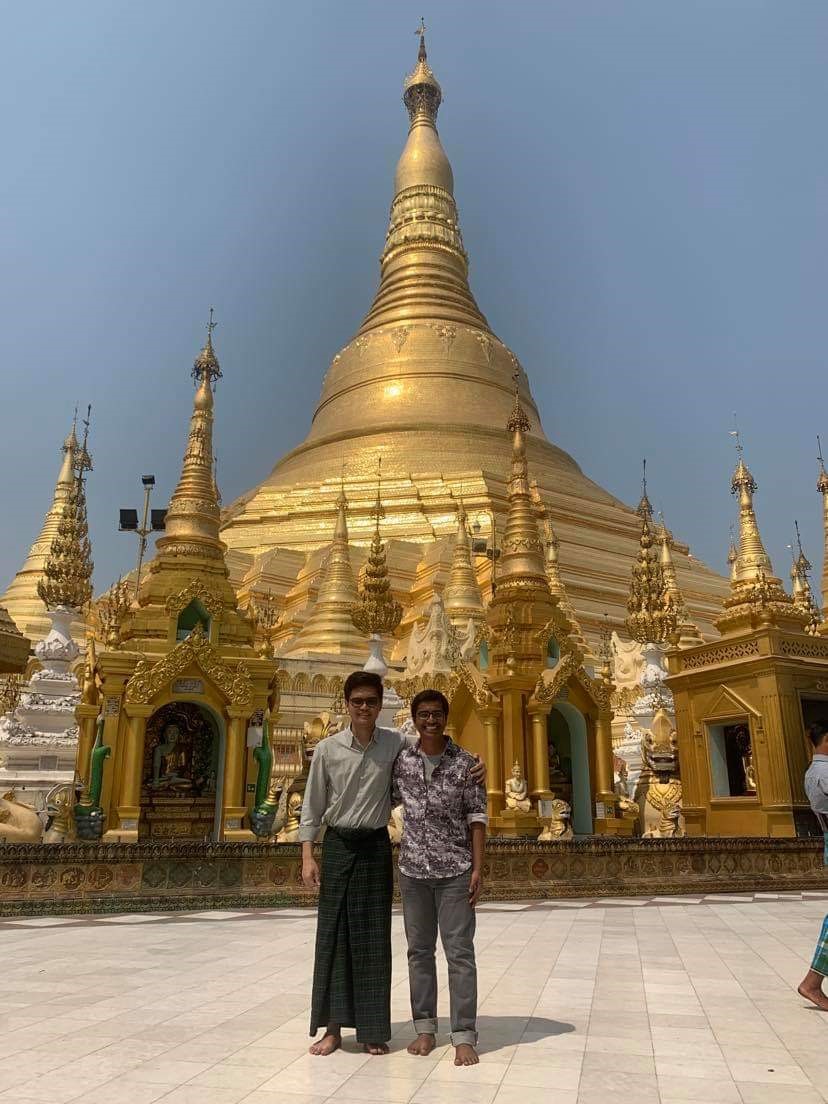
We have completed all the work to be done by 28th itself and since it was my first visit to Myanmar, Kawasaki sensei asked Nyi san to show me some good places at Yangon. So Nyi san, Badri san and I went to visit the iconic Shwedagon pagoda which was incredible and holy and later visited some malls and came back. In the evening we started back to Narita thinking about how great the Myanmar trip was.

@ Shwedagon Pagoda

@ Myanmar Plaza

One of the main things I enjoyed every day was the Myanmar food. It was very spicy and delicious. I have been missing that in Japan from a couple of months. Every day we used to have dinner together and Kawasaki sensei knew some very good restaurants and he would take us there and would order delicious food.  
One thing I will always remember from the Myanmar trip was that I came to know the number of projects Kawasaki sensei has been dealing with and was shocked to see his dedication and love towards his work. He has been giving presentations the whole day and still he never felt tired or relaxed and was constantly working on his projects and with lot of patience answered all my questions and also guided me on my master’s project during his free time. He’s schedule was so perfect and looking at him working every day, I derived a lot of motivation.

I would like to thank Kawasaki sensei and his team for making me feel safe, comfortable and giving some beautiful memories in Myanmar.

Monday, February 10, 2020

慶応大学SDMでの講演

慶應義塾大学大学院

システムデザイン・マネジメント研究科(SDM)公開シンポジウム

「システムデザイン・マネジメントで未来を創る-SDGsの課題解決に向けて-」


 開催日時:2020年2月22日(土)13:30-17:40

 場所:  慶應義塾大学日吉キャンパス独立館 DB201教室

 参加費: 無料


第1部「地球環境とエネルギーの未来を創る」

途上国の水災害レジリエンスの向上と貧困の削減に向けた研究と社会実装
 川崎昭如(東京大学大学院工学系研究科社会基盤学専攻 特任教授) 


慶応大学SDMウェブサイト
http://www.sdm.keio.ac.jp/2020/02/04-164704.html


Tuesday, December 31, 2019

Visit to US [December 4th - 15th]

Hi, this is Moiz, D3 student in Kawasaki Research Group. In this post I'd like to write about my recent visit to US from December 4th to 15th. The purpose of this visit was to present at a seminar at Harvard University arranged by Kawasaki-sensei and to present my poster at AGU (American Geophysical Union) Fall Meeting 2019. So, I got to visit two states this time i.e. California and Massachusetts.


  • December 4th - 8th - Massachusetts
  • Harvard University Campus
    I had always wanted to visit famous universities such as Harvard and MIT, so I was pretty excited about this trip. On the first day, we had a quick tour of the campus and it looked like something out of a movie. The architecture of the buildings had a very striking resemblance to those from movies such as Harry Potter, especially with a blanket of white snow on top. 

    Harvard Campus
    Another interesting thing about Harvard's campus was that it seemed significantly lively. There were a lot of common spaces always filled with students or researchers. In fact, these common spaces made one feel as if they were at home. I guess a comfortable environment is really necessary to enhance one's ability to think creatively.


    Seminar at Harvard University

    Kawasaki-sensei kindly arranged a seminar at CGA (Center of Geographic Analysis) for me to present my research related to robust energy planning. The title of my talk was 'Integrating Geospatial Technologies with Advanced Hydrological Models for Robust Energy Planning' (more details available here). Although, I was pretty excited about this talk (being at Harvard) I was pretty nervous as well since this talk was the longest I have ever delivered (up to 1 hour). Nonetheless, I think I was able to engage in a pretty interesting discussion with the audience and received several interesting comments on how to improve the hydropower site selection tool that we previously developed (published here).

    Seminar at CGA, Harvard University
    Additionally, I was also able to participate in a workshop associated with the Harvard Humanitarian Initiative (HHI) with other members of the Kawasaki Research Group gave very interesting presentations along with others from Harvard. It was interesting to see how GIS is being used in so many different ways across different research areas and it also gave me several ideas on how I can improve my tool as well.


    Massachusetts Institute of Technology
    On the last day, I was able to meet with an alumni from Meguro Lab at The University of Tokyo, who is currently at Florida International University doing his PhD. Coincidently, he was also in Boston at the same time and was kind enough to show me around Boston and visit the campus of MIT with me. As an engineer and academic, visiting MIT had always been a dream. Right, across the road from MIT we could also see the beautiful skyline of Boston.

    MIT Campus

    Boston's Skyline


  • December 9th - 15th - California
  • AGU Fall Meeting 2019
    Since this was my second time attending AGU, I better able to navigate through its schedule with a huge number of interesting presentations. This time I was also able to meet several researchers whose research I've been following very keenly over the past several years. I think the discussion with these researchers really helped me to think about the next steps in my research with a possibility of collaboration.

    Also, this time several people came to see my poster. It did however seem this research area (role of lapse rates in distributed hydrological models) hasn't been fully explored yet and very few researchers are working on it at this moment. It was also pretty lucky that Prof. Yang Kun from Tsinghua University (also alumni of The University of Tokyo) attended my poster presentation and gave me several interesting suggestions for my research in Snow Hydrology.

    Poster Presentation at AGU
    Additionally, I was able to catch up with several other recent alumni from our lab who were also attending AGU and discuss what kind of research or work were they up to.


    Visit to UC Berkeley
    Kawasaki-sensei also arranged a visit to UC Berkeley, which was pretty exciting as I've met several people back in Pakistan who graduated from this university. We also got a glimpse of what kind of different projects are researchers working on over there.

    UC Berkeley's Campus

    Posters at the Department of Civil and Environmental Engineering

    San Francisco
    Despite the busy schedule, luckily I could make some time to have a look around San Francisco. Unfortunately, the weather was pretty cloudy so it was difficult to get a good shot of the Golden Gate Bridge which was pretty much completely covered with fog.

    Golden Gate Bridge

    Close up view (surrounded by fog)
    It seemed like most people prefer to use cars in San Francisco since the streets were always lined with parked cars. The steep streets of San Francisco also looked like something out of several famous movies. It would make sense however to use a car here instead of traversing these steep slopes on foot.
    Steep streets of San Francisco

    Lastly, I could also enjoy eating Halal burgers at several places, something I really missed in Tokyo due to my food restriction. I was very surprised to see many places selling halal burgers in the US including the campuses of most universities.
    Halal Burger at San Francisco
    All in all, I had a really great time in these 2 weeks, especially since more people from our research group joined this time and I got to visit several famous universities. I'm very thankful to Kawasaki-sensei for creating such an interesting opportunity.

    Monday, December 30, 2019

    超大国アメリカ

    こんにちは、M2の下村です。私も12/4~15にかけてアメリカへ出張させていただきました。ほかの皆さんが時系列で詳しく系てくれているので、私は思い出に残ったことを中心に書いていきたいなと思います。印象深かった順なので順序がぐちゃぐちゃですが、あしからず。

    ①出張中二回の発表

    発表の準備が急遽変わり動揺しつつ発表

    ポスター発表は一日目で終了
    ボストンではハーバード大学の研究者の前で、サンフランシスコで開催されたAGUではポスターで発表するという貴重な体験をさせていただきました。私は洪水と貧困の悪循環というテーマで発表しました。6月から7月にかけて一か月ミャンマーに滞在した際(詳しくは以前のブログで)に収集したデータを使用して、世帯の収入レベルを基に洪水が住民に与えた被害や影響の差を分析しています。ハーバードではフィリピンで似たような研究をしている方とお話しでき、AGUではWFP(国連世界食糧計画)といった国連機関の方にも興味を持っていただけたのがとても刺激的でした。


    ②海外大学訪問
    今回の出張では、川崎先生がハーバード大学とUCバークレーを案内してくださいました。世界トップレベルの大学を見学でき、みんな興奮。どちらの大学も施設がとても充実していました。


    ↑ハーバードの図書館。ハリーポッターのような重厚感のある図書館で、皆さんとても集中して勉強されてました。「東大生は入学当初は優秀なのに入学してからはあまり勉強しない」と聞いたことがありますが、確かにそうかもなと思い身につまされる思いでした。


    ↑こちらはバークレー内にある展示場。世界遺産を空・地上などいろいろな角度から眺められるゲーム?説明書きは特になくただいじっているだけでしたが、映像がきれいで面白かったです。YMGMさんが楽しそうにコントローラーを握っていますね。


    ③アメリカの博物館
    ボストンで、ボストン茶会事件博物館に行きました。博物館自体は小規模でこじんまりしているのですが、とても凝った演出をしてくれるので面白かったです。

    当時の衣装を着た係員さんも一緒にぱしゃり
    まず博物館の係員?の方はみなさん当時の衣装を着ています。そして一人ずつアメリカ独立に関係した歴史上の人物を割り当てられ、ボストン茶会事件前夜を私たちも追体験できるという仕様になっていました。


    茶を海に投げ捨てる瞬間
    そのあとは、当時実際にイギリスからアメリカへお茶を運んでいた船の中を見学します。ボストン茶会事件さながらに、お茶が入った箱を海に投げ入れることができてみんなで体験しました(ひもで括り付けてあるので、海に投げた後は次の人が投げられるよう黙々と回収)。その後は独立戦争のムービーを見るのですが、これも当時の人の視点になって、戦争へ家族を送り出す人々の心情も描いているのが印象的でした。
    今年ヨーロッパ旅行に行った際も感じたのですが、欧米の博物館はムービーやゲームを駆使して来館者がよりリアルに当時の雰囲気を味わえるようにしている気がします(もちろん全部に当てはまるわけではありません)。歴史に関しては、恐竜や動物の展示などと違って特にほかの国の人にとって理解することが難しい部分も多いように感じます。日本の博物館は最近行っていないのでどうなっているかわかりませんが、せっかく日本の文化に興味を持って観光しに来てくれる人も増えているので、外国語対応を増やすとかだけでなく展示の仕方から工夫すればもっと多くの人に楽しんでもらえるのではないかと思ったりしました。


    ④日本車の流通
    最後になりますが、私が驚いたこと。それはぼーっと外を眺めていると、日本車を多く見かける一方でFordなどのアメリカ車はそこまで多くないように感じたことです。トヨタはともかく、特にホンダをよく見かけるのには驚きました(ミャンマーではホンダのバイクが多かった)。そういえばホンダは北米への輸出に力を入れていた気がしたなと思い調べてみたところ、「ホンダ、自動車ブランド評価1位」という記事を見つけました。

    ホンダの車
    これはアメリカの自動車評価会社ケリー・ブルー・ブックが調べたものだそうですが、アメリカでのホンダ人気がうかがえますね。そしてトランプ大統領が日本との貿易交渉で自動車の関税にこだわるのもよくわかる。


    アメリカで感じたことをつらつらと書いてしまいましたが、今回の出張ではボストンとサンフランシスコしか訪問しなかったものの超大国アメリカの格差を垣間見たように思います。やはり他の国に実際に行ってみないとわからないことが多いので、社会人になっても海外旅行する余裕は持ちたいな…と思いました(笑)そして英語を勉強しないと
    最後になりますが、川崎先生には、長期にわたって様々な経験をさせていただいたことに感謝しています。ありがとうございました。


    Friday, December 27, 2019

    初めての国際学会 in USA

    こんにちは! M1の奥田です。
    12月4日から15日までアメリカに行き、ハーバード大学でのワークショップやサンフランシスコでの学会に参加してきました。今回はその中で印象に残った部分について紹介します!

    12/4~8日:ボストン

    ♦️ハーバード大学でのワークショップ
    Harvard Humanitarian Initiative(HHI)という世界的な健康問題や人道支援について研究をしている部署の研究者の方々とのワークショップに参加しました。普段聞く機会のある研究分野とは全く異なる分野の話もあり、とても良い勉強になりました。特に、エージェントベースモデルで遊牧民の移動やパンデミックの広がりをモデリングしている研究が興味深かったです。

    また、このワークショップでは自分の研究についての発表も行いました。ハーバードの研究者の方々の前で発表ということで渡米前はかなり緊張していましたが、想定していたよりも和やかな雰囲気のワークショップだったので、そこまで緊張することもなく発表することができました。ハーバードの研究者の方々の前で発表をして意見をいただく機会はめったにないことだと思うので、非常に貴重な経験になりました。

    ♦️ハーバード大学構内の散策
    ワークショップ以外では、川崎先生にキャンパス内の案内をしていただきました。日本の大学との大きな違いだと感じた部分は、フリースペースやカフェのような一息つくことのできる場所がとても多いということです。フリースペースの大きな椅子で足をのばしながらパソコンで作業をしている人が多くいたのが印象的でした。東大にもこんな空間があればいいなと思いました。


    豪華なフリースペース


    ハーバード大学工学部の石碑の前での集合写真

    空き時間には大学構内になる自然史博物館を見に行きました。大学内の博物館とは思えないほど展示が充実していて驚きました。特に面白いと思ったのはガラスでできた植物の標本です。言われなければガラスで作られているとは気づかないほど精巧に作られていました。


    ハーバード自然史博物館

    ガラスで作られた植物標本

    ♦️川崎先生のお宅でのホームパーティー
    また、ボストンでは川崎先生の自宅に招待していただき、川崎先生の奥さまが作ってくださった料理をご馳走になりました!おいしい料理を食べながら、普段はなかなか聞くことのできない先生のご家族のお話を聞くことができて非常に楽しかったです。お忙しい中準備をしていただき、本当にありがとうございました!


    12/9~15日:サンフランシスコ

    ♦️学会でのポスター発表
    サンフランシスコでは、AGUという学会に参加しました。会場についてまず驚いたのがその広さです。とても広いホール内にポスターを張るための板が何列も並んでおり、国際学会の規模の大きさを実感しました。

    会場の様子(午前中の早い時間に撮ったのでまだあまり人はいません)

    ポスターでの発表内容は深層学習により、衛星画像から建物ごとの収入のレベルを推定するというもので、Global Environmental Changeのセクションでした。僕のポスターが割り振られた列は人通りが多く、たくさんの人が話を聞きに来てくれました。初めての国際学会だったので緊張していましたが、多くの人と研究内容について議論し、様々な意見や感想を聞くことができたのはとても良い経験になりました。

    ポスターについて説明している様子

    ポスター発表以外の時間には、ほかの人のポスターや口頭発表を見にいきました。これだけ多くの研究内容を一度に見ることのできる機会はそうそうないので、自分の研究内容に近いものからそうでないものまでたくさんの発表を見にいきました。僕がやっている研究に近いことをしている研究もいくつかあり、今後の展開を考えていくうえで良い刺激になりました。

    ♦️UCバークレー訪問
    川崎先生が調整をしてくださり、UCバークレーにも行くことができました。PhDの学生の方の山火事発生時の避難シミュレーションの研究について説明を受けたり、土質系の研究室を見学させていただいたりしました。こちらはボストンのように寒くなく、キャンパス内には多くの植物や芝生の広場等もあり、とても過ごしやすいキャンパスだと感じました。

    これを踏むと成績が下がるといわれており、学生たちは避けて歩いているそうです

    UCバークレーの門での記念撮影


    今回のアメリカ出張は準備しなければいけないことが多く大変でしたが、それ以上に得るものが多く、非常に密度の濃い12日間でした。貴重な機会を与えてくださった川崎先生をはじめ、現地でお世話になったすべての方々に感謝します。ありがとうございました!!

    Wednesday, December 18, 2019

    成長だらけの二週間@AGU参加記

    M1の西原です.
    先日,12/4~15にアメリカに出張し,サンフランシスコで開催されたAGU2019などに参加してきましたので,そのときの様子や感想を日記形式で記したいと思います.


    出発前
    AGUという学会があることを知ったのは,今年の初め,ミャンマーでの移動中の車内だったと記憶しています.そこで川崎先生から卒論の内容を磨き上げれば発表できるチャンスをいただけると聞き,海外の学会での発表を研究室に入った時からの目標としていたこともあり,嬉しい反面どのくらいのレベルが要求されているのかなどの不安もありました.

    その後夏休みをはさみ,モチベーションが下がってしまう時期もありましたが,HHI(Harvard Humanitarian Initiative)で発表する機会(後述)も与えられたことで11月後半は大学にこもりながら準備を進めてきました.
    出発前のポスターづくり

    1日目~5日目(12/4~8) @Boston

    今回のアメリカ出張は,前半にボストンで川崎先生の研究室訪問やHHIでのセミナーを行い,後半にサンフランシスコでAGUに参加するというスケジュールでした.

    1日目に移動した後,2日目はハーバード大学の構内を川崎先生に案内していただきました.ハーバード大学はボストン市郊外のとても落ち着いた雰囲気のところにあり,街全体が大学構内のような感じさえ受けました(実際に大学の建物は散らばっていて,また大学周辺にはお土産屋がたくさんあります.街中でもeduroamが飛んでいます!).案内を受けるなかで強く印象付けられたのは,私立大学ということもあって寄付によって建てられた建物が多いということ,そしてその建物の質がとてもよいことです.具体的には顧問スペースの数の多さ,セミナールームの数の多さ,椅子や机の豪華さ,コーヒーメーカーなどのアメニティの充実度など数え上げたらきりがありません.また最近ではリモート作業ではなく大学に足を運んでもらうための仕掛けの一つとして,キッチンなども充実させているようです.

    ハーバード大学構内を歩く

    ハーバード大学構内のキッチン.IKEAのモデルルームのよう
    3日目にはHHI(Harvard Humanitarian Initiative)でセミナーを行い,HHIの研究者と私たちの研究内容を互いに発表しあい,意見交換を行いました.HHIは世界的な健康問題を扱っている学科であり,工学的なアプローチから研究を行っている我々とは全く違うといってよい分野の方々ばかりでした.しかし互いに質問をぶつけあうなかで,今までとは違った目線からの質問が多くあり,自分の発表以外の時間も大変勉強になりました.ただ,ネイティブの英語を聞き取ることはとても大変でした...座談会みたいなアットホームな雰囲気だったので多少は落ち着いて話すことができたと思うのですが.
    とにかく,ハーバード大学の研究者の前で発表を行い,セミナーを行ったという経験は一生の思い出になりました.
    HHIでの発表の様子.差し入れのお菓子やコーヒーで机が埋まっています.

    6日目~10日目(12/9~13) @San Francisco
    アメリカ大陸の東端から西端に移り,後半はサンフランシスコで行われたAGU2019に参加しました.聞くところによると数万人以上の参加者がいて,自然科学分野では世界最大の学会だそうです.会場のコンベンションセンターであるMoscone Centerは改装されて新しく機能性に優れていました.

    私は12/12,4日目の朝にポスター発表をしました.内容は多目的ダムと発電ダムを持つ流域での洪水時操作の最適化,という題で,Water Energy Nexusセクションに振り分けられていました.ポスター発表では同じセクションの発表者や,隣接セクションのOral Convenerのお偉いさんからも質問を受け,説明の真意が伝わったかどうかは不明ですが何とか対応することができました.
    私の研究周りに関する全体的な感想は,水力発電(水エネルギー問題)では気候変動を考慮してマクロに分析している研究が多いということ,また一流域での分配モデルを作成する研究群では各ステークホルダー間の影響を整理するという研究が多く,(Oralでは結果や詳細なモデルの条件より世界観の紹介に重きを置いて発表していることもあったでしょうけど...)具体的にどのように最適化を行っているかという部分はあまり見えませんでした.ただ自分の周りの研究者がどのようなレベルでどのようなアプローチで研究しているかが分かったので,帰って論文を漁ってみようと思います.

    研究まわり以外での全体的な感想としては,AGUではポスター数やオーラルセッションの数があまりにも多く,自分の研究に近い発表を探すことがそもそも難しいため,タイトルだけではなく詳細な部分まで予習してから見に行かないとハズレが多いなという印象を一番受けました.事前にプログラムを見て入念に計画を立てればよかったのですが,ほとんど当日朝に計画していた今回は効率の悪い回り方をしてしまったのかなという反省があります.学会慣れが必要ですね...

    ポスターの説明をする
    学会の合間にはサンフランシスコの街を歩いたり,おいしいものを食べたりして過ごしました.レストランはだいたい東京の2倍くらいの値段しますが,アメリカ料理,メキシコ料理,南部料理,ラテンアメリカ料理など日本ではなじみの薄いエスニック料理をたくさん食べられて大変満足でした!
    SF発の人気バーガー,Super Duper

    準備期間が長かったこともあり,今年最後にして最大のハイライトとなった二週間でした.先生をはじめこのような機会をくださったすべての方々に感謝します.ありがとうございました!

    今回の参加メンバーと先生