~☆Climate Tech Day @ 東京大学 ☆~
川崎が登壇します
気候変動への対策を考える際には、温室効果ガスの排出の抑制や、森林等の吸収作用を保全及び強化することで、地球温暖化の防止を図る「緩和策」だけでなく、地球温暖化がもたらす現在及び将来の気候変動の影響に合わせて対処していく「適応策」も検討することが必要です。このセッションでは、適応策の中でも大きなトピックである、「水」「農業」に関して、研究者とスタートアップの立場から議論を行います。
東京大学 社会基盤学科 河川研川崎グループ(川崎昭如 教授)のブログです。Blog of Kawasaki Group (Prof. Akiyuki Kawasaki) at REEL, Department of Civil Engineering, The University of Tokyo
~☆Climate Tech Day @ 東京大学 ☆~
川崎が登壇します
気候変動への対策を考える際には、温室効果ガスの排出の抑制や、森林等の吸収作用を保全及び強化することで、地球温暖化の防止を図る「緩和策」だけでなく、地球温暖化がもたらす現在及び将来の気候変動の影響に合わせて対処していく「適応策」も検討することが必要です。このセッションでは、適応策の中でも大きなトピックである、「水」「農業」に関して、研究者とスタートアップの立場から議論を行います。
川崎グループの研究活動を紹介する動画を、当時の大学院生の米原慎さん、西原克哉さん、五十川利憲さんに作ってもらいました!どうぞご笑覧ください。
We directly conducted the survey the next day after our arrival. As this is my first social engineering experience, I was so excited. Kawasaki Sensei and I, along with the surveyor teams, visited several low-income areas which were heavily inundated by flood around Ayutthaya District in Thailand. Listening to the livelihood of the impacted person directly in the survey hit differently when compared to when listened to it from the news or YouTube.
It was really unlikely to believe if it has not been directly mentioned by the local that there was flood occurred with depth about 2 meters from the ground and last for 3months. Those with ample money could increase their house platform level to adapt with flood while those who can’t afford had to live and sleep with flood water inside their house during 3 months of flood period. Kids were unable to study normally as schools were also closed during flood period. Local’s business product and household utilities were also often damaged.
During the survey, I also noticed that in its process was not always easy and smooth. For instance, some family refuse to answer the questions while some didn’t fulfil the criteria as our respondent. In often cases, several areas were very isolated to be reached by cars. Nevertheless, I am glad that the activity was carried out by qualified team who were all friendly and patient while communicating to the responded. Additionally, I am also accompanied by Kodaka Sensei from Keio University who has helped and given me many new insights during the survey.
Aside from the research, I was so tied up as there was exam I need to nail. I was supposed to do the exam offline in the classroom, but fortunately I alternative was given - I was doing my written exam while supervised by Kawasaki Sensei himself. Here is a picture of me taken by Sensei. HAHAHA, the shoulder felt lighter after the test.
Nevertheless, despite all of the tied schedule and exam, I manage to have some fun in Thailand! The foods were heaven! The Spicy Basil dish is definitely my favorite! ( I had it for my lunch for 3 days in a row ;D ). On the next picture, several sweets incoming!! The famous mango sticky, gelato and bubble tea on a hot days. #TeamSweetTooth.
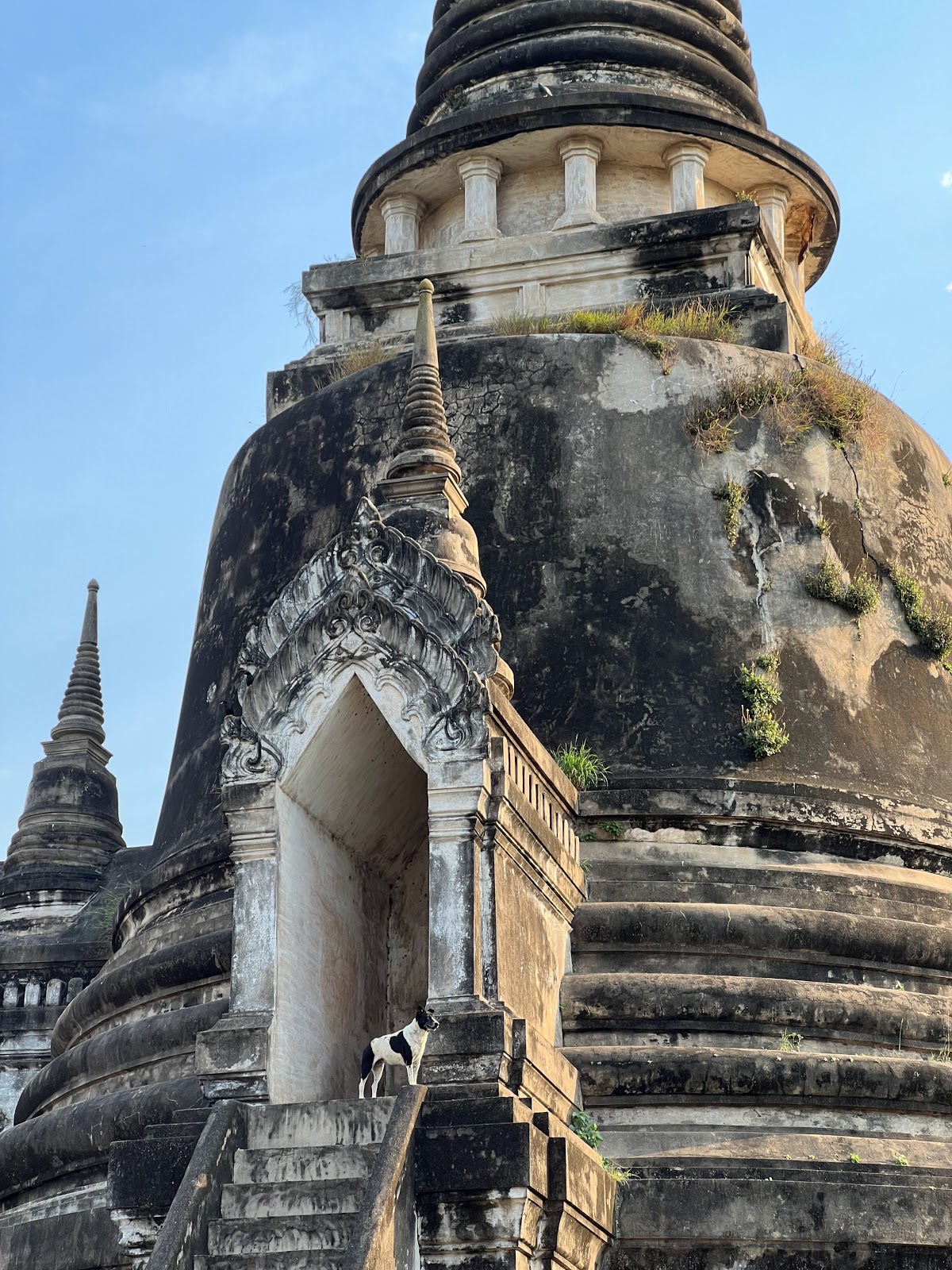
Last but not least, it is not officially visiting Thailand without visiting Thailand’s best known of – Its Buddhism Temple. The view was breathtaking especially the moment when the sun was about to set creating a golden color coating above the temple. I attached several picture for you as well below to let you observe by yourself the majestic of the temple. Amazing, isn't it?
We left New Haven on December 11 and made our way to Chicago for the 2022 AGU Fall Meeting, which was held there from December 12 to December 16, 2022.
The AGU Fall Meeting is the world's largest geoscience conference, with over 25,000 attendees from more than 100 countries, covers the Earth Sciences and its derivatives, other related disciplines such as Bioecology and Planetary Science, and is not limited to geophysics. It is a great opportunity to meet scientific groups from all over the world, no matter how advanced, unusual, or specialized the researcher's topic is. The information, suggestions, and inspiration we receive at these conferences are on par with what we learn in the classroom.
This year's AGU Fall Meeting was held at the McCormick Convention Centre in Chicago. The days of the meeting were either occupied by groups of earth scientists brandishing poster reels like swordsmen or a crowd of attendees traveling to and from the conference. One of the events I remember the most was the large poster session. Thousands of posters were rotated up in only a few short days. I was one of the individuals who had only half a day to prepare their own poster and set it up before having to deliver it to the audience. To my amazement, throughout the roughly three hours that I presented the posters, there was a sizable audience interested in my message. It was really gratifying to discuss my thoughts with numerous researchers from different fields and to receive so many insightful comments. What surprised me most was that Prof. Toshio Koike, who had just received the AGU Ambassador Award, came to listen to my presentation and was very kind in giving me lots of suggestions and encouragement!
Of course, after the conference, my new friends and I spent some time touring the energetic American city of Chicago! One of the biggest cities in the country, Chicago is a bustling metropolis full of possibilities. Chicago's famous Millennium Park and Cloud Gate were our first stop. This landmark building, affectionately referred to by locals as the Big Bean, is located in the middle of the park and offers a mirror-like reflection of the skyline where tourists from all over the world assemble to take precious souvenir photos.
We also traveled across Michigan Avenue, Chicago's principal thoroughfare connecting its north and south. Neon lights in golden hues illuminate the lake on each side of the Michigan Bridge at night, while the Trump Tower stands out boldly on the shore, looking opulent and contemporary. Heading south, we can reach the Art Institute of Chicago. As the city's top art museum, you could spend a whole day there and still not see everything. Finally, we also hit up the home of the Chicago Bulls, the United Center, to witness the Michael Jordan statue. Thanks to the fusion of cultures, we were able to eat Mexican, Italian, and a variety of new and eclectic dishes in Chicago. Prof. Kawasaki and I had the famous deep-dish pizza at Giordano's. Unlike the pizza in New Haven, the deep dish pizza here is very thick and covered in rich cheese, which gives it a unique flavor.
This AGU Fall Meeting experience has facilitated my understanding of the frontiers of my discipline and has given me a full appreciation of the multicultural beauty of Chicago.
Hello, I am Zhao Han, a Ph.D. student in the Kawasaki lab. On December 8, Prof. Kawasaki and I traveled from Tokyo to New Haven, Connecticut, USA, to visit our colleagues at Yale University.
Our jet initially touched down in New York, and as we traveled from that city to New Haven, we were able to see Manhattan, the city's busiest port. On the way, coincidentally, Prof. Kawasaki and I also met a Chinese researcher who was going to New Haven with us, this trip was filled with excitement.
We traveled for almost two hours before arriving in New Haven, home to Yale University, a renowned institution of higher learning both domestically and worldwide. It seemed like Yale was everywhere as we got closer to downtown. After a fantastic lunch, we finally met our co-workers Reed, Zach, and Salma from Franch. Reed and Zach then showed us around Yale's beautiful campus. Yale University is the third oldest university in the country and has no gates, making it an open campus. The university's accommodation buildings are quaint and all the buildings are unique and full of humanity. I was most impressed by the Beinecke Rare Book and Manuscript Library, the largest building in the world dedicated to the preservation of rare books and manuscripts.
After that, we traveled to a building deep inside Yale University to discuss the status of our research progress. Unlike online meetings, the face-to-face format helped us to better comprehend each other's perspectives. After the discussion, Reed also invited us to try the special potato pizza at Bar Restaurant and super delicious ice cream in downtown New Haven. Here, the pizza was thin and crispy, and the portions were enormous in comparison to other places!
In addition, Newhaven is especially lovely at night, and because it's almost Christmas, everyone is in the holiday spirit. The streets were decorated with choirs, ice-carved reindeer, and all sorts of lights decorating the roads at night. On the last day, it even snowed slowly in New Haven, the first snow I had seen this year. After that, I went to the Yale University Art Gallery, which I had been wanting to see. It had four floors of historical and cultural artifacts from four continents respectively, and entry was free. It is filled with precious ceramics, African sculptures, and paintings from the European Renaissance.
This trip to Yale will always be one of my favorite experiences.
Prof. Toshio Koike received the very honorable AGU (American Geophysical Union) Ambassador Award in Chicago! Congratulations on the Award, Koike-sensei!
こんにちは。M2の五十川です。2回連続の登場です。
11/3に,EcoBalacnce学会で福岡に行くついでに福岡近郊での環境保全が行われている場所を巡りました。今回はそのレポートのJapanese版です。
今回の視察では,アメリカ・Yale大学からEcoBalance学会のためにはるばる日本へいらっしゃったReedさんと一緒に巡りました。
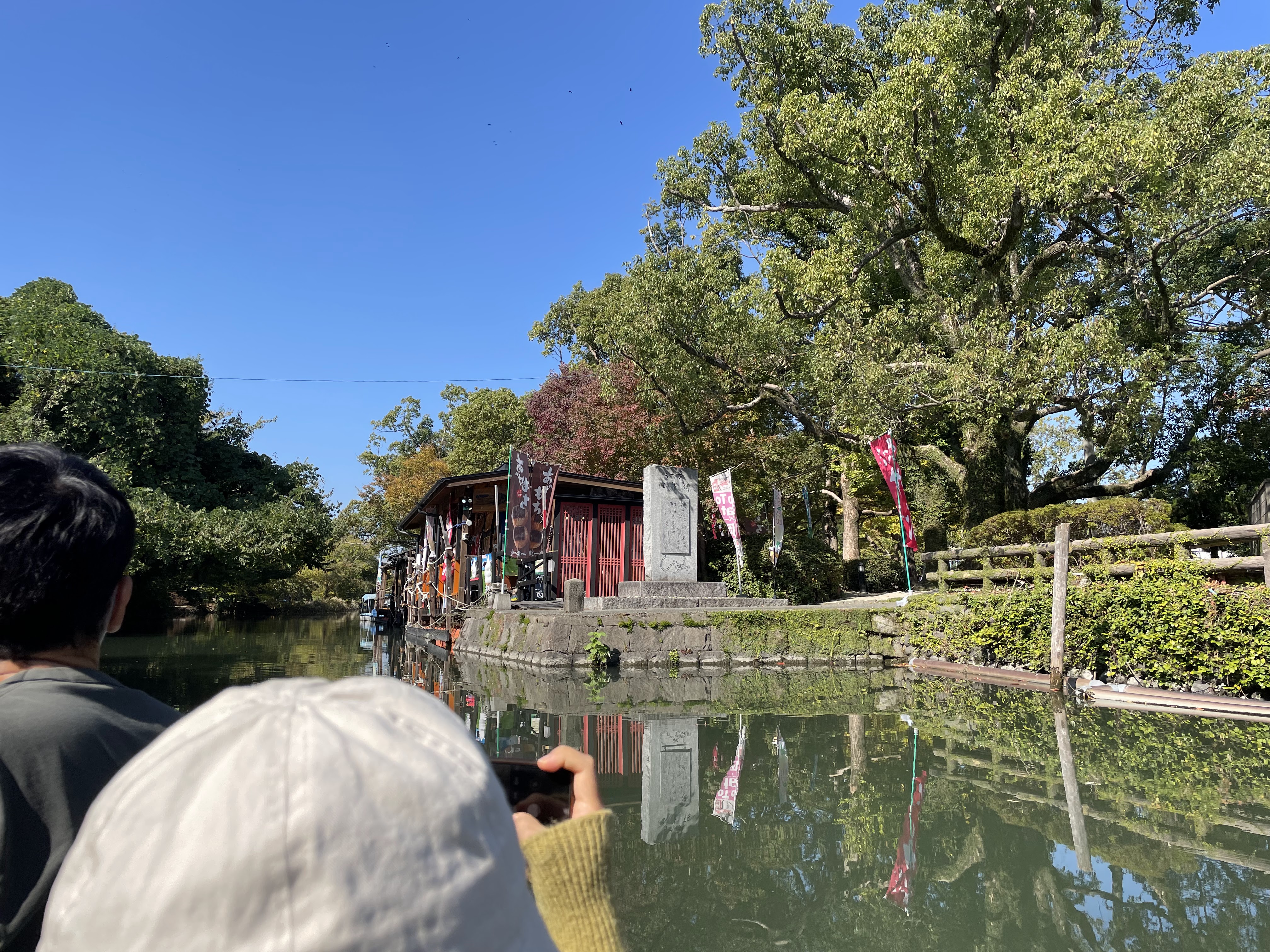
まず,川下りで有名な柳川へ。船に乗り,柳川城跡の外濠水路を船頭さんの説明とともに眺めました。ちょうど訪れた時期が柳川出身の文豪である北原白秋をたたえる「白秋祭」の日であり,普段は見られないであろう灯篭や提灯が飾られていました。昼頃に訪れたので残念ながら灯篭流しは見れなかったのですが…。
| 川に面した出店も |
次に,ラムサール条約にも登録されている有明海方面へ向かい,熊本・荒尾市にある荒尾干拓水鳥・湿地センターへ訪れました。館員の方曰く,荒尾干潟は定期的にボランティアの方が清掃活動を行っているようで,他の干潟とは異なりいつも綺麗なことが自慢ですとのこと。確かに海岸にはほとんどゴミが落ちていなかったような気がします。また,
その後,2015年に世界文化遺産に登録された三池炭鉱へ。明治期から昭和期にかけての石炭産業の栄枯盛衰に関する資料を一通り見たのち,閉山後の工場の様子を当時の労働環境を想起しながら見学しました。
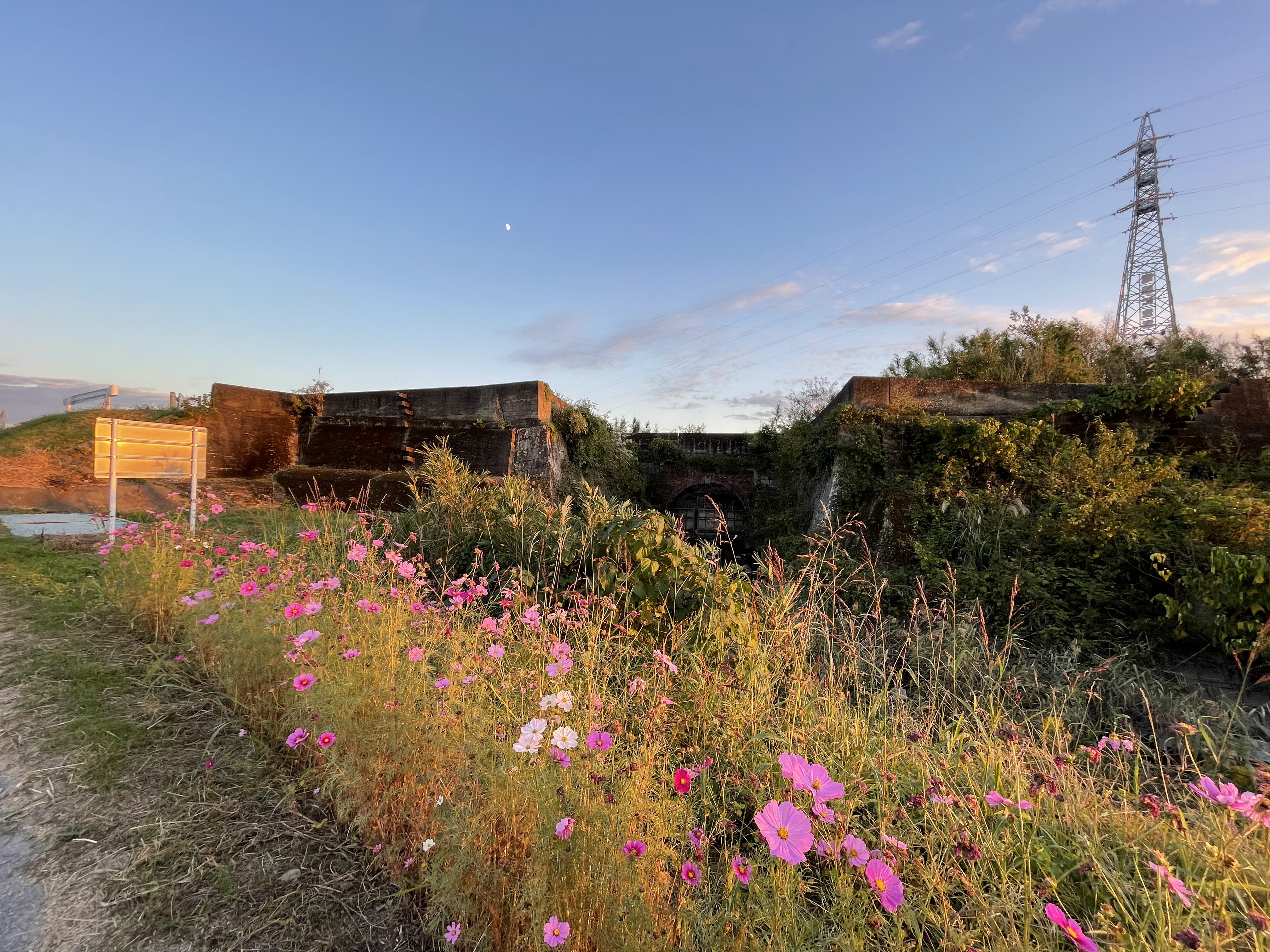
最後に,干拓事業の一環として建設された永治堤防・矩手(かねんて)水門へ。干拓地をつくるため,100年以上も前により効率の良い排水を行うために建設された堤防・水門で,水門のレンガによるアーチが印象的でした。
EcoBalance学会では環境を主なテーマと捉えていたため,河川とその関連施設を主とした普段の調査とは異なり新鮮味がありました。今回の視察でエネルギー問題や生態系保全等に対し,より深く考える非常にいいきっかけとなったかなと思いました。